Have you ever had this experience?
Nothing is working. You have pulled an all-nighter, but the facts will not stick. You schedule a 45-minute nap, hoping to wake up some-what refreshed and ready to crush the exam. But, when you wake up, the information is gone.
Now you are hopelessly hoping you can osmosis the facts directly into your hippocampus, subverting the whole memory process. You were just trying to learn about…

Here is Grace, on the 21st of June 2020 at 5:22 pm, balancing her ANAT331 Functional Anatomy lab book on her head, hoping the information would osmosis into her hippocampus while she fixed her posture.
As much as you wish it could, our brains cannot simply osmosis information directly into our hippocampus.
Sleep is the glue that sticks learning in place, but studies indicate it cannot create new memories from information you have not actively processed. You must first do the mahi to lay the foundation.
Your brain is not an endlessly open water bottle that fills itself.
When a lid is screwed on, the water you pour will not go in to the bottle.
In the same way, our brain has a barrier, which physicallys blocks and protects. Unfortunately, the information we learn cannot simply be poured straight in with no learning and then easily retained…
Neuroplasticity: Your Brain Never Stops Growing
Your brain isn’t set in stone. It is physically capable of change at any age. This is called neuroplasticity.
Every time you truly understand a concept, the connections between your neurons strengthen. This process is called synaptic strengthening. Think of it like making a road network from scratch.
You start from a Dirt Road. This is a new concept that can feel confusing and hard to remember. The path is rough, and every step takes effort.
With practice and the right strategy, you place down gravel, making a Gravel Road. The path becomes smoother and easier to travel. You are making progress, but you still have to watch where you are going.
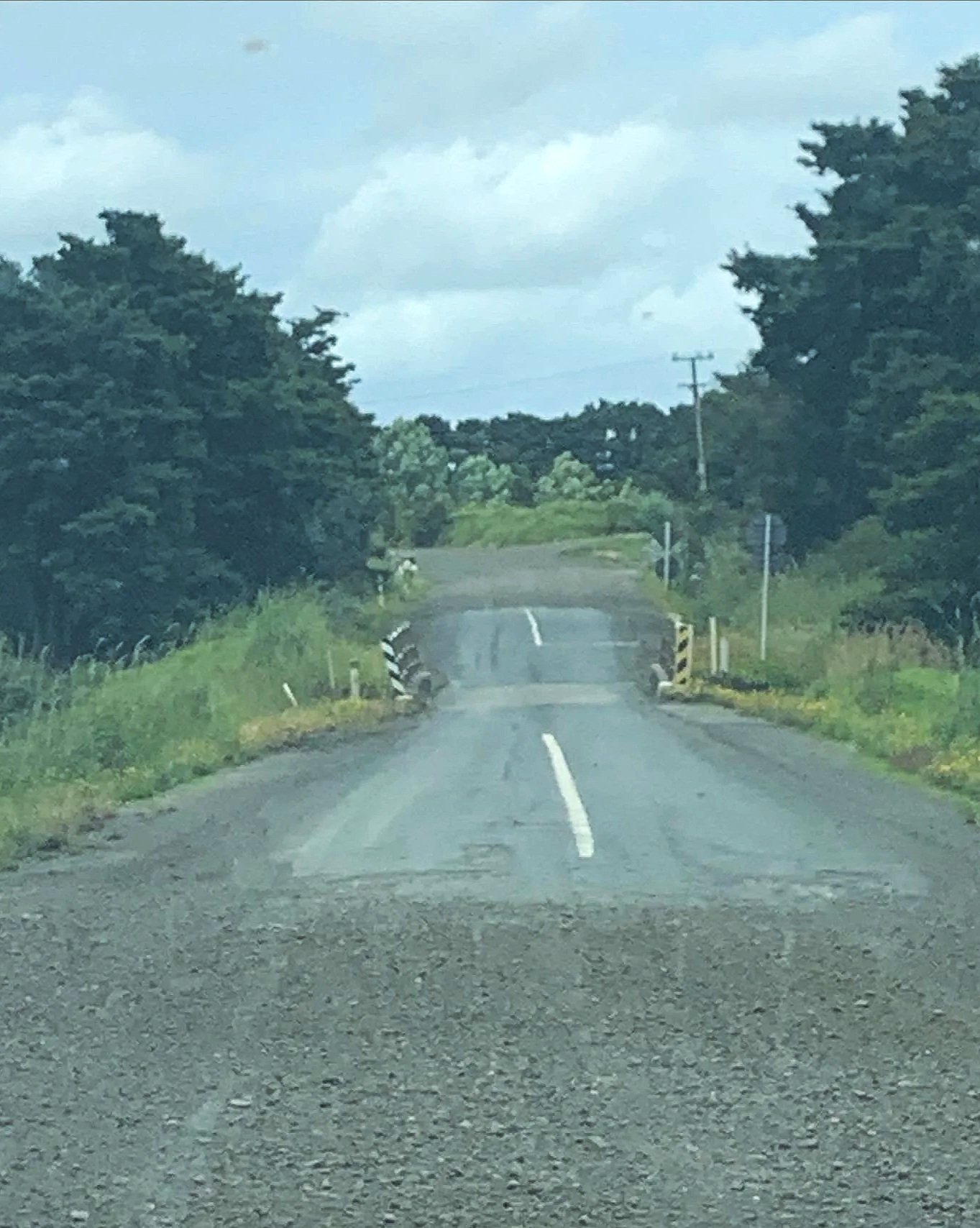
As understanding deepens, you pave the surface, creating a Sealed Road. The journey becomes solid and reliable. You can travel faster now, but you still need to focus on the route to stay on track.
With continued engagement, that path widens into a Motorway. The knowledge becomes automatic. You can travel at speed with ease, and the destination feels close.
Finally, you build Bridges. These are the connections between concepts. When you understand how one idea links to another, you build a bridge. Biology connects to chemistry. A cell process connects to a real medical case.
Suddenly, you aren't just travelling one road, you were actually travelling down New Zealand’s State Highway 1 or for our international audience, a Super Highway.
Research suggests that adult brains can increase grey matter density when acquiring new skills, and that these neural connections appear to strengthen throughout life. Studies indicate that every mind is capable of this change
Curiosity is the engine
Why do some concepts stick while others fade?
It often can be linked to dopamine.
When you are genuinely curious, your brain activates its reward system. This creates a state of anticipation that drives motivation. Research indicates a link between this dopaminergic activity and deeper learning and memory encoding.

TL:DR
At Aperio Academy, our aim is to help you build the framework for your individual brain to thrive.
Think of your brain like Spotify. Hard to imagine, but stay with us…
If you are like Grace, your Liked Songs playlist is filled to the brim. Everything from classics to DnB to the theme song of Wizards of Waverly Place. It is a jungle. Overwhelming to navigate.
But imagine a playlist called Lock In. Only music made by Hans Zimmer.
You click "Lock In".
That click does more than start music. It may kickstart the encoding.
Curiosity seems to signal to your memory centre (the hippocampus) that this information matters. The result often includes deeper encoding and longer retention. This is how the brain appears to be built to work.
If you are in a last minute panic, play the same song you were listening to when you studied. Or even hum the melody in your exam. It may help pull the information back to the surface.
Neuroplasticity is the algorithm. It learns your taste and builds the connections. Every time you understand a concept, the algorithm strengthens the link, turning a single song into a seamless playlist that plays automatically.
We will guide you through the process. We fuel the DJ with clinical logic and real-world scenarios to spark that genuine curiosity. We tune the algorithm to turn rough, unstructured paths into smooth, sealed roads. We help you build the bridges that connect new ideas to what you already know.
Research suggests that listening to music while studying can help your brain link the songs to the material. Later, hearing those same songs can reactivate the same neural pathways, triggering your memory. It essentially acts as a cheat code for recall!
Curiosity is the DJ. It picks the song and sets the mood. When you are genuinely curious, your brain hits play, signalling that this information matters.
You were always smart enough. You just needed the correct grip to twist the lid, turn the key, and start building your own dirt road, all the way to form your own State Highway 1.
Reference List:
Doidgep, N. (2010). The Brain That Changes Itself: Stories of Personal Triumph from the Frontiers of Brain Science. Carlton North, Vic: Scribe Publications.
Draganski, B., Gaser, C., Busch, V., Schuierer, G., Bogdahn, U., & May, A. (2004). Neuroplasticity: Changes in grey matter induced by training. Nature, 427(6972), 311-312. https://doi.org/10.1038/427311a
Godwin, J. (2017). Studying with Dyslexia (2nd ed.). Red Globe Press. (See p. 53 for the Study Triangle model).
Gruber, M. J., & Ranganath, C. (2019). How curiosity enhances hippocampal-dependent memory: The prediction, appraisal, curiosity and exploration (PACE) framework. Trends in Cognitive Sciences, 23(12), 1016-1029. https://doi.org/10.1016/j.tics.2019.09.003
Gruber, M. J., Gelman, B. D., & Ranganath, C. (2014). States of curiosity modulate hippocampus-dependent learning via the dopaminergic circuit. Neuron, 84(2), 486-496. https://doi.org/10.1016/j.neuron.2014.08.060
Kandel, E. R., Koester, J. D., Mack, S. H., & Siegelbaum, S. A. (2021). Principles of Neural Science (6th ed.). McGraw-Hill Education.
Walker, M. P. (2017). Why We Sleep: Unlocking the Power of Sleep and Dreams. Scribner.
Roediger, H. L., & Karpicke, J. D. (2006). Test-enhanced learning: Taking memory tests improves long-term retention. Psychological Science, 17(3), 249-255.